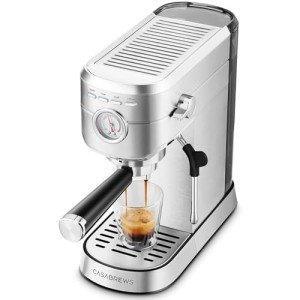
The Ultimate Guide to Buying Espresso Coffee Machines
Espresso coffee machines have quickly become a staple in homes and cafes worldwide. With their ability to produce rich, concentrated coffee rapidly, lots of coffee fanatics choose brewing espresso at home instead of counting on coffee bar. Purchasing an espresso machine can be a challenging process, given the myriad of choices readily available in the market. This post supplies detailed insights into various kinds of espresso machines, key functions to consider, and ultimately helps ambitious home baristas make an informed decision.
Understanding Espresso Machines
There are a number of kinds of espresso machines, each designed for various user choices and requirements. Below is a table detailing the types of machines readily available:
| Type | Description | Pros | Cons |
|---|---|---|---|
| Manual Machines | Operated by hand, permitting full control | Greater control & & quality Steeper knowing curve | |
| Semi-Automatic Machines | Integrates manual operation with automated functions | Versatility and consistency | Needs more skill than completely automatic |
| Completely Automatic Machines | Automated developing, making espresso with the push of a button | Convenience and consistency | Less control over the developing process |
| Pill Machines | Use pre-packaged capsules for developing | Exceptionally easy to use | Restricted range and greater long-lasting expense |
| Super-Automatic Machines | Fully automated processes consisting of grinding & & brewing | All-in-one convenience | More expensive and less manual control |
Choosing the right machine mainly depends upon the user's familiarity with coffee brewing, wanted control level, and budget.
Secret Features to Consider
When looking for an espresso machine, numerous important features should be considered:
- Pressure: Look for a machine that runs at a minimum of 9 bars of pressure, which is ideal for drawing out espresso.
- Boiler System: Machines may include single or dual boiler systems. Dual systems are considered more flexible as they can brew espresso and steam milk at the same time.
- Milk Frothing Capability: For lattes and cappuccinos, a great steam wand or automatic milk frothing alternative is important.
- Size and Design: Consider the available area in the cooking area. Larger machines may offer more features but require more counter area.
- Ease of Cleaning: Look for machines with detachable parts and easy-to-clean surfaces, as regular upkeep is key to longevity.
- Modification Options: Some machines offer customizable settings for temperature, volume, and strength. This feature is considerable for people who enjoy try out different flavors.
- Price Range: Espresso machines can vary from affordable to high-end designs. Set a budget that reflects your use frequency and concerns.
Budgeting for an Espresso Machine
Buying an espresso machine can vary widely in cost. It is crucial to establish a budget that lines up with your coffee intake and choices. As a guide:
- Under ₤ 100: Entry-level capsule machines and fundamental manual machines.
- ₤ 100 - ₤ 500: Good quality semi-automatic machines with more features and much better build quality.
- ₤ 500 - ₤ 1,500: Professional-level machines providing sophisticated features, dual boilers, and boosted efficiency.
- ₤ 1,500 and above: High-end, commercial-grade machines created for serious enthusiasts and coffee shop owners.
Upkeep and Care
Correct upkeep extends the life of an espresso machine and preserves the quality of the coffee. Here are some upkeep tips:
- Regularly clean the portafilter and other removable parts.
- Descale the machine at suggested intervals to prevent mineral accumulation.
- Rinse the steam wand after every use to eliminate milk residue.
- Examine the water quality; utilizing filtered water can substantially enhance the taste and minimize scale.
FAQs
1. What is the very best kind of espresso machine for newbies?
For beginners, a semi-automatic espresso machine is typically recommended, as it offers a balance of control and user-friendliness.
2. Can I make latte art with any espresso machine?
You can make latte art with machines that have a great steam wand or automatic milk frothing capabilities.
3. How typically should White Espresso Machines descale my espresso machine?
You need to descale your espresso machine every 3 to 6 months, depending on the hardness of your water and usage frequency.
4. Is a more pricey machine worth the investment?
Usually, more expensive machines provide better build quality, consistency, and feature sets, which can boost the general coffee experience. Nevertheless, the worth is subjective to user needs.
5. Do I need a grinder, or are there machines that include one?
Some super-automatic and high-end machines featured integrated grinders, while lower to mid-range designs may require a different grinder for ideal espresso extraction.
Purchasing an espresso machine is an amazing financial investment for coffee enthusiasts and enthusiasts. By comprehending the various types, features, and key factors to consider included, potential buyers can discover the best machine to fit their requirements. Whether Heat Exchange Espresso Machines 's the happiness of crafting the best shot of espresso or acquiring the capability to brew cafe-quality coffee at home, the best espresso machine can transform the day-to-day coffee ritual into a wonderful experience.